General Shadrack Sibiya Biography: Age, Wife, Education, Suspension & Net Worth

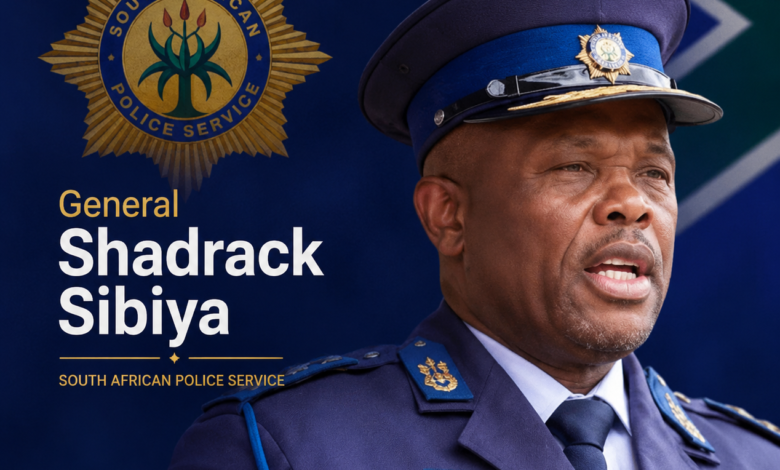
There are police officers who serve quietly in the background, and then there are those whose careers become a mirror for an entire nation’s struggles with crime, power, and accountability. General Shadrack Sibiya belongs firmly in the second category. With nearly four decades of service in the South African Police Service, he rose from a student constable in the late 1980s to one of the highest-ranking law enforcement positions in the country — only to find himself at the centre of one of South Africa’s most explosive policing controversies in recent memory.
This biography takes an honest, detailed look at the man behind the headlines — his roots, his education, his career milestones, his personal life, and the serious allegations that have put his legacy under the microscope.
Who Is General Shadrack Sibiya?
General Shadrack Sibiya is a South African police officer who served as Deputy National Commissioner for Crime Detection in the South African Police Service (SAPS), holding the rank of Lieutenant-General. He is widely regarded as one of the most experienced investigators in the country’s policing history, having led elite units including the Hawks’ Gauteng branch and the Commercial Crimes Unit over the course of his career.
His name became widely known not just for his anti-corruption work, but for the storm of allegations, suspensions, parliamentary testimony, and judicial inquiries that have surrounded him since 2025. He sits at the intersection of crime-fighting achievement and serious institutional controversy — a figure who both supporters and critics view as representing the broader tensions tearing at South Africa’s justice system.
General Shadrack Sibiya Date of Birth and Early Life
General Shadrack Sibiya was born on 15 July 1967 in Johannesburg, South Africa, which makes him 58 years old as of 2025. He grew up in Gauteng province during the apartheid era, a period that shaped daily life for millions of South Africans in profound ways.
His upbringing was grounded in public service values. His father worked as a civil servant, and his mother was a teacher — a household built on the idea that you show up for your community. Those early influences stayed with him. He attended Kgatsheng Middle School and later completed his matric in 1988 at Rauwane Sepeng School in the Rustenburg area of North West province.
Growing up in Johannesburg with parents who served the public, seeing inequality and the need for justice up close — these experiences formed the foundation of a man who would dedicate his adult life to law enforcement. By his early twenties, he was ready to step into that world.
General Shadrack Sibiya Education
Sibiya’s formal education began in Johannesburg schools, where he built core academic skills before setting his sights on policing. After completing his matric in 1988, he enrolled as a student constable at the SAPS Hammanskraal Police Academy, where he received structured training in criminal justice, law enforcement strategy, and community safety.
His commitment to learning did not stop at basic training. Over the years, he pursued further qualifications through the University of South Africa (UNISA), earning a diploma in criminal justice. He also holds a B-Tech degree in Policing and a National Diploma in Police Administration, alongside multiple certifications in criminology and forensic investigation.
This combination of formal academic qualifications and hands-on investigative training gave him a genuine edge as he climbed the ranks. He often cited ongoing education as a cornerstone of effective policing — a belief reflected in both his career choices and his professional development over nearly four decades in the service.
Career: From Constable to Lieutenant-General
The Early Years
Sibiya’s career kicked off in 1988 when he joined as a student constable at Hammanskraal. From there, he transitioned to patrol duties and then quickly found his footing in detective work. In the early 1990s, he worked as an investigator at Telkom, handling internal probes — a stint that sharpened his investigative instincts in a corporate setting.
By around 2000, he had risen to Detective Captain at the National Central Bureau of Interpol in Pretoria, dealing with cross-border crime and international investigations. This role broadened his perspective significantly, connecting local South African policing to global enforcement networks.
The Scorpions and the Hawks
In the mid-2000s, Sibiya became Chief Special Investigator in the Scorpions — the elite anti-organised crime unit that tackled South Africa’s most complex criminal networks before it was controversially disbanded. When the Scorpions were dissolved, he moved seamlessly into the Hawks (Directorate for Priority Crime Investigation), heading the Commercial Crimes Unit from 2009.
His work there was significant. His teams investigated large-scale fraud and financial crimes, making hundreds of arrests and recovering millions of rands in stolen funds. In 2011, he was elevated to Gauteng Hawks Head, overseeing operations in one of the country’s busiest and most crime-affected provinces.
Among his notable investigations during this period was the “uLibambe lingashoni” probe into Richard Mdluli, a former crime intelligence chief linked to state capture allegations. This demonstrated Sibiya’s willingness to pursue powerful targets — a quality that would later, depending on who you ask, either define him as a fearless investigator or make him a target himself.
The 2015 Suspension and Reinstatement
In 2015, Sibiya was dismissed from the SAPS following disciplinary action linked to allegations that he played a role in the illegal rendition of Zimbabwean nationals in 2010 — specifically, the transferring of individuals to Zimbabwean authorities without following proper extradition procedures. Some of those men were later reportedly killed by Zimbabwean police.
Sibiya denied involvement and took his case to court. The Labour Appeal Court ultimately ruled that his dismissal was both procedurally and substantively unfair and ordered his reinstatement. It was a rare and significant legal victory that restored his standing, even if the controversy continued to follow him.
City of Johannesburg Anti-Corruption Role
After his reinstatement battle, Sibiya did not immediately return to national policing. Instead, in 2016, he joined the City of Johannesburg as Head of the Group Forensic and Investigation Services (GFIS), where he led anti-corruption investigations into local government. Under Mayor Herman Mashaba’s administration, his unit exposed numerous graft schemes across municipal departments.
Return to SAPS and Appointment as Deputy National Commissioner
In 2023, he returned to national policing and was appointed Deputy National Commissioner for Crime Detection — one of only five Deputy National Commissioner positions in the entire SAPS — holding the rank of Lieutenant-General. In this role, he oversaw the national detective architecture, specialised crime-fighting units, and major strategic investigations across the country.
It was the peak of a career that had spanned nearly four decades.
General Shadrack Sibiya Suspended: What Happened?
The events of 2025 brought General Shadrack Sibiya’s career to a dramatic halt.
In July 2025, National Police Commissioner Fannie Masemola placed Sibiya on special leave — effectively a suspension. The core allegation was that he had interfered with the Political Killings Task Team (PKTT), a specialised police unit established to investigate politically motivated assassinations, particularly in KwaZulu-Natal. He was accused of attempting to redirect 121 sensitive case dockets held by the task team to his own office.
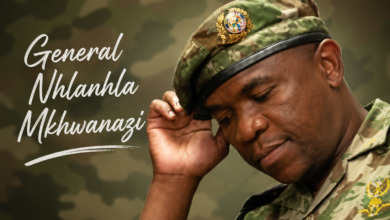
The controversy escalated when KwaZulu-Natal Police Commissioner Nhlanhla Mkhwanazi made explosive public accusations, claiming that Sibiya and then-Police Minister Senzo Mchunu had colluded to disband the task team without the knowledge of the National Commissioner. Mkhwanazi’s allegations triggered responses from Parliament, the Presidency, and multiple investigative bodies.
Sibiya challenged his suspension in court, but in September 2025, the Pretoria High Court dismissed his application to return to work, allowing the suspension to stand while investigations continued.
The Raid on His Centurion Home
In October 2025, heavily armed officers from the National Intervention Unit, the Special Task Force, and Crime Intelligence surrounded Sibiya’s home in Centurion at around 3 am. They conducted a search and seizure operation, removing electronic devices for forensic analysis.
Sibiya described the raid as deeply traumatic for his family, saying his children were terrified and his elderly, sick mother was distressed by the operation. He publicly called the raid a politically motivated intimidation campaign, timed deliberately ahead of his parliamentary testimony.
Parliamentary Testimony
When Sibiya appeared before the Ad Hoc Parliamentary Committee in October 2025, he did not shrink from the confrontation. He told MPs plainly: “I’ve never been a rogue officer in my 37 years in the police. I deny the allegations.” He pushed back on claims of improper relationships with alleged criminal figures, insisting his interactions were limited to receiving intelligence tips and professional dealings.
The Madlanga Commission
In February 2026, Sibiya testified before the Madlanga Commission of Inquiry, established by President Cyril Ramaphosa to probe claims of collusion between state officials and organised crime. At the commission, he faced allegations that a witness known as Witness F had identified him as employing a courier to collect cash from alleged cartel figures Katiso “KT” Molefe and Vusimuzi Matlala. A separate claim alleged that Matlala had given him 20 impalas as gifts.
Sibiya denied all of it. He argued that the allegations were part of a sustained campaign to discredit and remove him from office — a campaign he said dated back to his earlier clashes with powerful figures within the police system. He also alleged social media attacks orchestrated by supporters of Mkhwanazi.
The commission proceedings remain ongoing.
General Shadrack Sibiya Wife and Personal Life
General Shadrack Sibiya is married to Helen Sibiya, his second wife. The couple lives in Centurion, Gauteng, and has children together, though Sibiya has consistently kept the details of his family life out of the public eye — a choice many in high-risk positions make to protect their loved ones from the fallout of professional exposure.
During the October 2025 raid on their home, Sibiya spoke emotionally about the impact on his family, describing the scene of masked, armed officers moving through their home while his children were secured in a room. “I feel like Joseph, whose brothers threw him into a pit,” he told journalists afterwards. “I’m not angry. I’m hurt.”
His earlier romantic life made headlines in 2013, when it was reported that he had been in a relationship with SABC2 weather presenter Tshidi Diphoko, which ended following reported infidelity. Both parties confirmed the split publicly at the time.
For most of his career, Sibiya’s identity has been defined by his work rather than his personal life — a disciplined officer and family man who drew a firm line between professional duty and private space.
General Shadrack Sibiya Net Worth
General Shadrack Sibiya’s net worth is estimated to fall in the range of $1.2 million to $4.5 million as of 2025. The bulk of this is attributed to his long career in the South African Police Service, which spans nearly four decades and includes some of the highest-ranking positions available within the SAPS structure.
It is worth noting that estimates of this kind carry significant uncertainty and are based largely on career earnings, pension entitlements, and his additional role heading the City of Johannesburg’s Group Forensic and Investigation Services. There is no verified public record of extraordinary personal wealth, and Sibiya has presented himself publicly as living modestly.
The allegations at the Madlanga Commission — including claims of receiving cash payments and gifts from alleged cartel figures — remain unproven and are strongly denied by Sibiya himself.
Legacy and the Bigger Picture
The story of General Shadrack Sibiya is, in many ways, the story of South African policing itself — full of genuine achievement, political complexity, and unresolved tension.
He helped build and lead units that made real dents in organised crime and corruption. He survived a dismissal that courts later ruled was unjust. He returned to public service and climbed to one of the most senior positions in the country’s policing architecture. And then, at the peak of that career, he found himself suspended, raided, and testified against before multiple institutions.
Whether the ongoing investigations vindicate him or expose serious wrongdoing remains to be seen. What is clear is that his case has already forced South Africa to have difficult, necessary conversations about accountability within the police service, the influence of organised crime on state institutions, and the political pressures that shape who gets investigated and who gets protected.
Sibiya has not been found guilty of anything. He is, as South African law demands, presumed innocent until proven otherwise. But his story will continue to unfold through court proceedings, commission hearings, and parliamentary scrutiny — and the outcome will say as much about the system he served as it does about the man himself.
Quick Facts: General Shadrack Sibiya at a Glance
| Detail | Information |
|---|---|
| Full Name | Shadrack Sibiya |
| Date of Birth | 15 July 1967 |
| Age (2025) | 58 years old |
| Place of Birth | Johannesburg, South Africa |
| Nationality | South African |
| Wife | Helen Sibiya |
| Education | SAPS Hammanskraal Academy; UNISA Diploma in Criminal Justice; B-Tech in Policing; National Diploma in Police Administration |
| Rank | Lieutenant-General |
| Position | Deputy National Commissioner for Crime Detection, SAPS |
| Status (2025) | Suspended (on special leave) |
| Net Worth | Estimated $1.2M – $4.5M |
Frequently Asked Questions
Who is General Shadrack Sibiya? He is a South African police officer who served as Deputy National Commissioner for Crime Detection in the SAPS, holding the rank of Lieutenant-General. He led elite units including the Gauteng Hawks and the Commercial Crimes Unit over a nearly 40-year career.
When was General Shadrack Sibiya born? He was born on 15 July 1967 in Johannesburg, South Africa, making him 58 years old in 2025.
Who is General Shadrack Sibiya’s wife? He is married to Helen Sibiya, his second wife. The couple lives in Centurion, Gauteng, and has children together.
What is General Shadrack Sibiya’s educational background? He trained at the SAPS Hammanskraal Academy and later earned a Diploma in Criminal Justice from UNISA, a B-Tech in Policing, and a National Diploma in Police Administration, alongside criminology and forensics certifications.
Why was General Shadrack Sibiya suspended? He was placed on special leave in July 2025 following allegations that he interfered with the Political Killings Task Team’s dockets and had inappropriate ties to alleged organised crime figures. He denies all wrongdoing.
What is General Shadrack Sibiya’s net worth? His net worth is estimated between $1.2 million and $4.5 million, derived primarily from his long career in the SAPS.
Has he been found guilty of any wrongdoing? No. As of early 2026, he remains under investigation. Multiple proceedings are ongoing. He is presumed innocent until proven guilty.