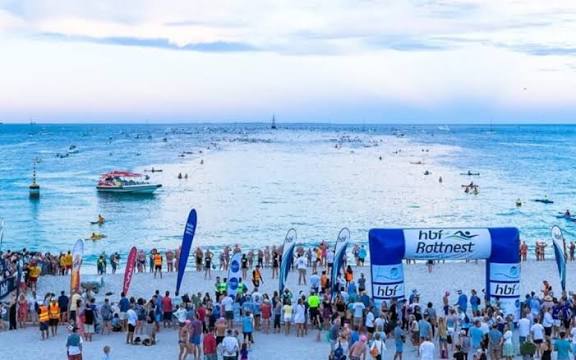

Who Will Win Rottnest Swim 2026? Top Contenders,Elite Swimmers and Race Analysis
Introduction
The Rottnest Channel Swim remains one of the most prestigious and demanding open-water endurance swimming events in the world. Scheduled for February 21, 2026, the race once again brings elite athletes, international marathon swimmers, and determined amateurs together for a nearly 20-kilometre ocean crossing between Cottesloe Beach in Perth and Rottnest Island in Western Australia.
Unlike controlled pool competitions, the Rottnest Swim is shaped heavily by natural forces. Swimmers must contend with shifting tides, unpredictable currents, ocean swells, wind resistance, temperature changes, and the psychological strain of long-distance isolation in open water. The event has earned global recognition not simply for its distance, but for its complexity.
As anticipation builds for the 2026 edition, the main question dominating endurance swimming discussions is straightforward: who is most likely to win?
Several high-profile swimmers are expected to headline the elite field. Defending champion Max Coten, Olympic medalist Gregorio Paltrinieri, and experienced marathon swimmer Andrea Filadelli stand out among likely contenders. However, history suggests that Rottnest races are rarely predictable. Environmental conditions, tactical decisions, and psychological resilience often play a decisive role.
This comprehensive authority article examines the race from every angle — contenders, strategy, historical trends, environmental factors, athlete profiles, expert predictions, and what fans should realistically expect in 2026.
The Rottnest Channel Swim: History and Prestige
The Rottnest Channel Swim began in 1990 and has since evolved into one of the largest open-water swimming events globally. Participation includes solo swimmers, relay teams, duos, and elite international competitors. Over time, it has grown into both a community sporting tradition and an elite endurance test attracting world-class athletes.
The course distance of approximately 19.7 kilometres may seem modest compared to ultra-marathon swims, but the open-ocean nature of the event adds layers of difficulty. The crossing involves real-time navigation decisions, feeding logistics, and adaptation to rapidly changing environmental conditions.
Winning the Rottnest Swim carries significant prestige in the open-water swimming community. Champions often gain international recognition and career momentum in marathon swimming.
Course Characteristics and Environmental Challenges
The Rottnest Channel presents a unique set of challenges that distinguish it from other marathon swims.
Ocean Currents
Currents in the channel can vary dramatically depending on tides, wind direction, and seasonal factors. Swimmers rarely travel in a straight line. Navigational efficiency becomes as important as physical endurance.
Even minor deviations from the optimal route can add extra distance, increasing fatigue and affecting finishing time.
Wind and Swell Conditions
Wind direction influences surface water texture. Calm conditions produce relatively smooth swimming, while strong winds generate chop that disrupts rhythm and increases energy expenditure.
Swells can also interfere with breathing patterns, especially during later race stages when fatigue sets in.
Water Temperature
While generally manageable, water temperature fluctuations can affect muscle efficiency and comfort. Swimmers must balance wetsuit choices, feeding frequency, and pacing accordingly.
Mental Demands
The psychological challenge of swimming for over four hours in open ocean conditions cannot be overstated. Fatigue, monotony, and environmental stress combine to test mental resilience.
Many swimmers report that mental endurance is as critical as physical conditioning.
Leading Contender Analysis
Max Coten – The Defending Champion
Max Coten enters the 2026 race as the defending champion and arguably the most logical favorite. His previous victory demonstrated not just physical strength but tactical intelligence and environmental familiarity.
His strengths include strong pacing discipline, local ocean experience, and effective navigation skills. Having already conquered the Rottnest Channel successfully, he possesses psychological confidence that many competitors lack.
Defending champions historically perform well in repeat attempts because they understand race dynamics intimately. However, they also face pressure and heightened scrutiny from rivals.
If conditions resemble those of his previous winning year, Coten remains the safest prediction for a podium finish.
Gregorio Paltrinieri – Olympic-Level Challenger
Gregorio Paltrinieri represents international elite competition at the highest level. Known globally for Olympic success in distance swimming, he has transitioned impressively into open-water marathon events.
His aerobic capacity, race intelligence, and finishing strength make him a formidable competitor. He has experience managing tactical pack swimming and adapting to competitive pressure.
However, the Rottnest Channel differs significantly from typical championship courses. Local knowledge can prove critical, and adapting quickly to unfamiliar ocean patterns will determine his competitiveness.
If he adjusts effectively, Paltrinieri may possess the raw speed to challenge for victory.
Andrea Filadelli – Tactical Marathon Specialist
Andrea Filadelli is respected for strategic racing rather than explosive speed. His approach typically emphasizes energy conservation, efficient drafting, and carefully timed surges.
Such tactics often yield strong results in unpredictable ocean swims. Filadelli’s endurance credentials and experience in international open-water competitions make him a credible podium contender.
Observers expect him to remain patient early in the race before potentially making decisive moves in later stages.
Domestic Australian Contenders
Local swimmers frequently perform strongly at Rottnest due to familiarity with Western Australian coastal conditions. These athletes train regularly in similar environments and understand regional current patterns.
Domestic contenders may not always carry international recognition, but they often benefit from experience in comparable conditions. Local swimmers also tend to adapt quickly when weather conditions become challenging.
This factor makes the race more competitive than international rankings alone might suggest.
Race Strategy Considerations
Start Phase Strategy
Elite swimmers rarely sprint aggressively at the start. Instead, they establish comfortable rhythm while maintaining advantageous positioning within lead packs.
Overexertion early in a four-hour endurance swim can lead to severe late-race fatigue.
Mid-Race Management
The middle section of the race usually determines outcomes. Feeding schedules, hydration, pacing consistency, and drafting decisions all influence final performance.
Athletes who conserve energy effectively often outperform faster but less strategic swimmers.
Final Push
The last few kilometres separate contenders from champions. Swimmers who have maintained efficient technique and energy reserves can accelerate, while fatigued competitors struggle to sustain pace.
Late-race tactical decisions frequently determine podium placements.
Nutrition and Support Crew Roles
Escort boats play an essential role in Rottnest swims. Support teams provide hydration, nutrition, navigational guidance, and safety oversight.
Proper feeding intervals can prevent cramps, dehydration, and energy crashes. Teams carefully plan carbohydrate intake, electrolyte balance, and timing based on individual swimmer needs.
Effective coordination between swimmer and support crew often contributes significantly to success.
Historical Trends and Predictive Insights
Examining previous Rottnest races reveals several consistent patterns:
- Tactical pacing generally beats aggressive early speed.
- Environmental conditions heavily influence finishing times.
- Experience in open ocean swimming correlates strongly with success.
- Weather variability often creates unpredictable results.
These trends suggest that experience and adaptability remain crucial factors in predicting winners.
Weather Variables and Race-Day Uncertainty
Weather remains the largest wildcard in any Rottnest Channel Swim. Wind direction, tide strength, swell height, and temperature conditions can all shift rapidly.
Calm conditions typically favour technically efficient swimmers with strong aerobic engines. Rough conditions often benefit experienced ocean swimmers accustomed to navigating challenging environments.
Predicting weather impact months in advance remains impossible, which keeps race forecasts uncertain.
Psychological Preparation
Endurance swimming demands exceptional mental discipline. Swimmers must maintain focus for several hours despite fatigue and environmental distractions.
Visualization techniques, breathing control, and pacing confidence all contribute to psychological resilience.
Many elite swimmers emphasize mental preparation as a decisive factor in marathon performance.
Technology and Modern Training Advances
Advancements in training science have improved preparation for events like Rottnest. GPS analysis, stroke efficiency monitoring, nutrition optimization, and environmental simulation training all contribute to performance gains.
These technological improvements may lead to faster finishing times and more competitive races in future editions.
Global Impact of the Rottnest Channel Swim
The event continues expanding internationally. Participation from Olympic medalists and elite open-water specialists enhances global visibility.
It also contributes to sports tourism in Western Australia and promotes open-water swimming worldwide. The race combines elite competition with community participation, making it uniquely inclusive.
Conclusion
The 2026 Rottnest Channel Swim is shaping up to be one of the most competitive editions in recent years. A defending champion with proven local expertise, internationally decorated Olympic competitors, experienced domestic swimmers, and unpredictable environmental conditions create a compelling sporting narrative.
While Max Coten appears the most logical favorite due to experience and previous success, Gregorio Paltrinieri’s elite conditioning and Andrea Filadelli’s tactical strength ensure a highly competitive race.
Ultimately, Rottnest rewards not only speed but strategy, resilience, navigation skill, and adaptability. The swimmer who balances these elements most effectively will likely emerge victorious.
Regardless of the outcome, the 2026 race promises another memorable chapter in one of the world’s premier endurance swimming events.
